1988–2003 · The age of the WSO-guided weapon
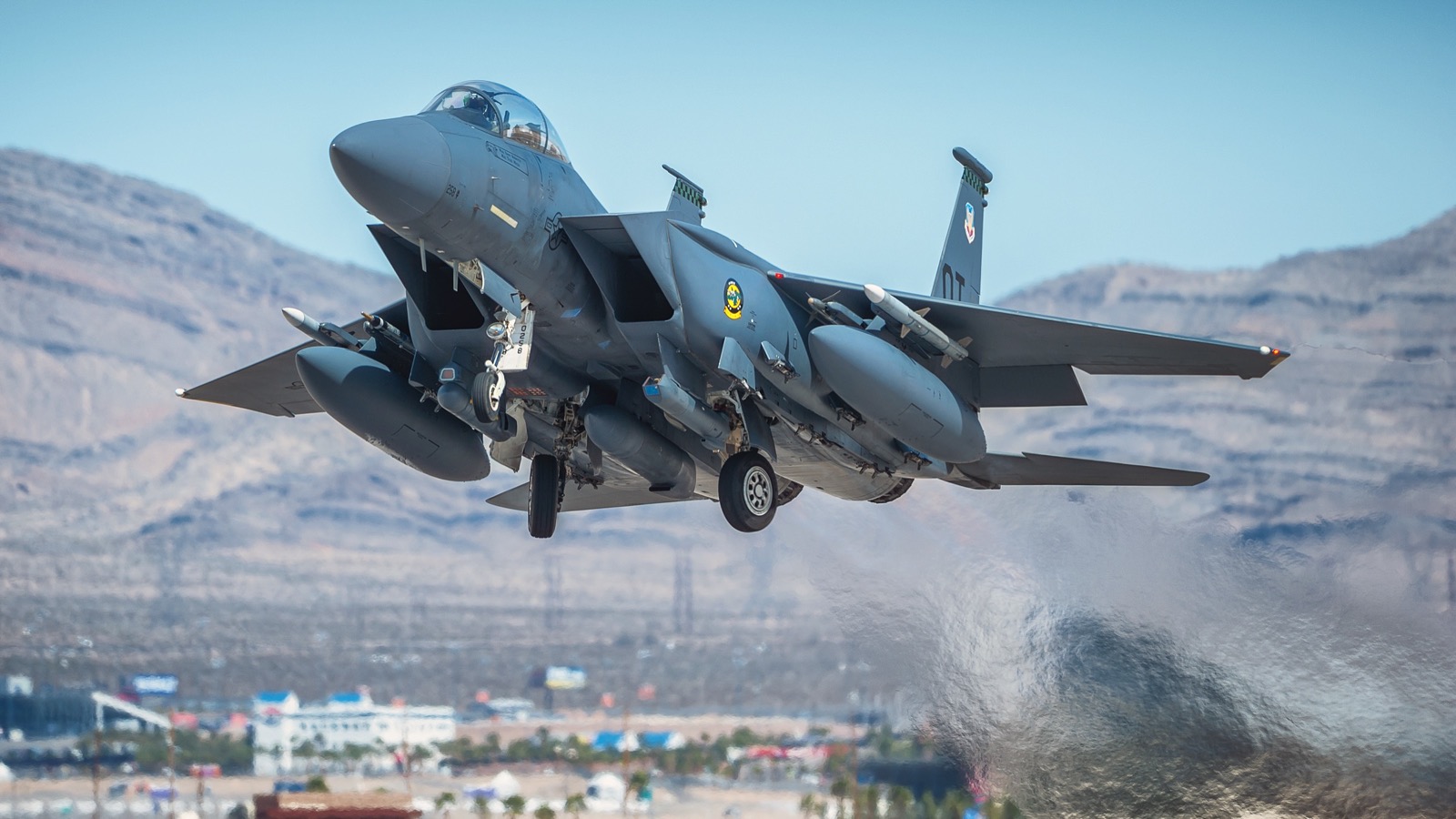
The original F-15E entered service around a formidable but labour-intensive arsenal. GBU-10, GBU-12 and GBU-24 laser-guided bombs depended on the weapon systems officer maintaining a clean laser track through impact. For stand-off attack, the television-guided GBU-15 and its powered derivative, AGM-130, allowed the crew to steer the weapon after release through the AXQ-14 data-link pod. They were sophisticated, expensive and demanding—the apex of a world in which the aircraft remained closely involved all the way to the target.
“AGM-130 and GBU-15 were the apex weapons for the Strike Eagle in my first tour… but when I got back to the jet at Lakenheath, it had totally gone.”— Randall “Hacker” Haskin, F-15E pilot, interviewed for Twenty Years at War
That disappearance matters. It shows how rapidly the mission moved away from specialised, pre-planned deep strike after 2001. The old weapons were not simply replaced by better bombs; the entire relationship between aircraft, crew and target was changing.
2003–2008 · JDAM arrives—but only by degrees
The GBU-31 brought a 2,000 lb Mk 84 or BLU-109 warhead onto GPS/INS guidance; the 500 lb GBU-38 offered the same all-weather logic in a size better suited to the wars in Iraq and Afghanistan. On paper, SEEK EAGLE had cleared the JDAM family early. In the squadrons, the revolution was slower. Aircraft initially dropped JDAM only from centreline station 5. The conformal-fuel-tank stations had to be wired in stages, so crews could possess the weapon in theory while still deploying with nine GBU-12s because that was what their jets could actually employ.
“We were moving away from the bread-and-butter of GBU-12s and dumb bombs… GBU-38s and 31s were coming online. That was a noticeable shift in what the Strike Eagle was actually being asked to do.”— Timothy “Neko” Tendall, instructor WSO
JDAM moved much of the terminal problem into the weapon, but the community deliberately kept training for the day GPS disappeared. Crews practised radar map updates, INS correction and laser-bomb employment because, as Tendall put it, an intelligent enemy watching two decades of JDAM warfare would eventually “figure out how to make JDAM not work.”
2007–2016 · Smaller weapons, harder targets
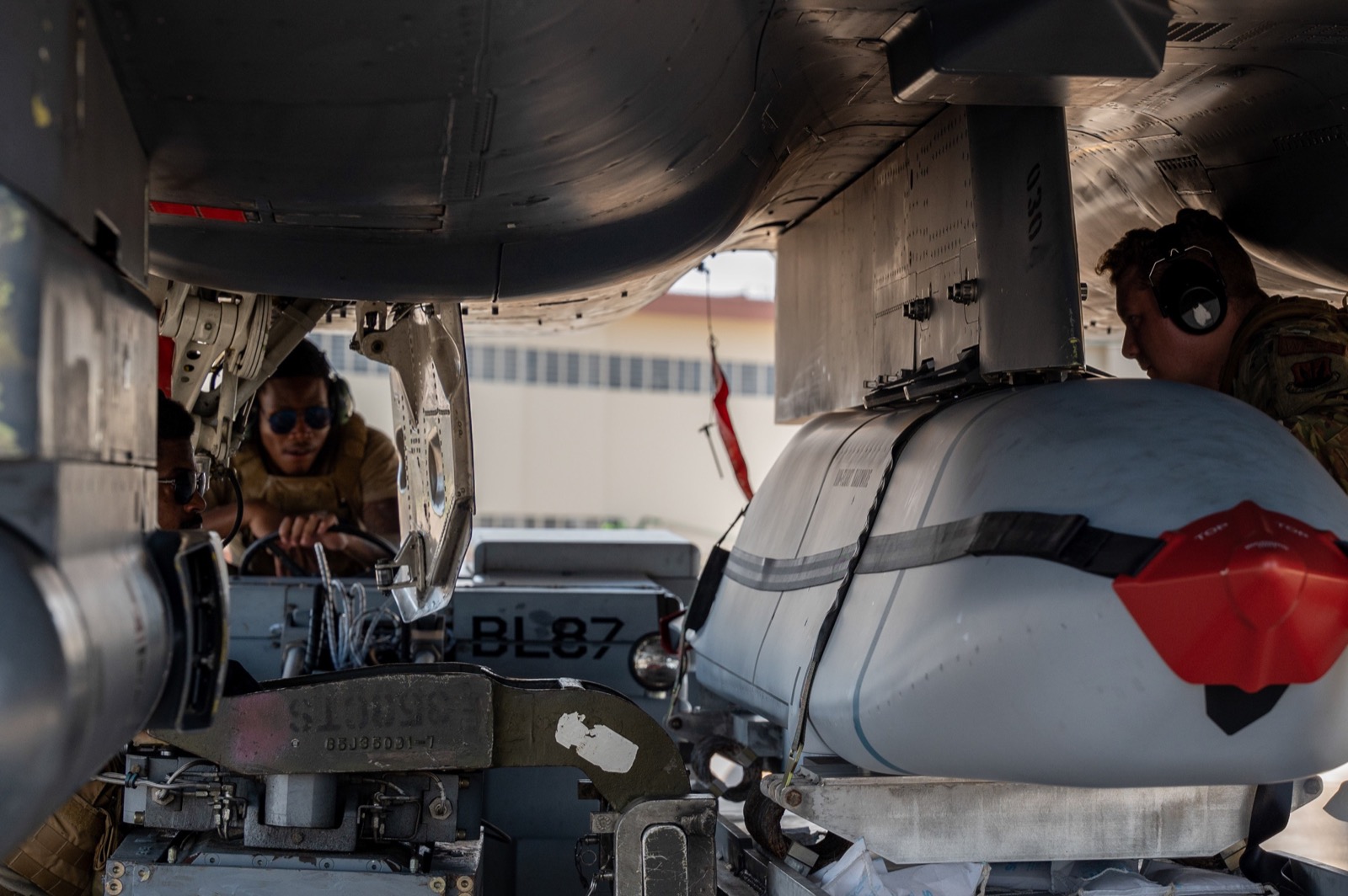
The 250 lb GBU-39/B Small Diameter Bomb I was the next step-change. Four bombs sat on each BRU-61/A rack; a theoretical maximum load of 28 gave one F-15E the capacity to attack many discrete aim points, while the glide profile could produce roughly 40 miles of stand-off. Its small warhead also made it valuable around houses, mosques and friendly troops. In Afghanistan, however, crews discovered that the elegant diagrams concealed long times of flight, uncertain trajectories and temperamental racks. The second operational SDB employment left Haskin watching a cockpit timer count down four minutes and thirty-five seconds while the JTAC expected impact in thirty.
“SDB used two great ideas—low yield and weapon survivability—but… had not done a good job of bringing them together.”— Randall “Hacker” Haskin, after dropping four SDBs during a troops-in-contact mission
GBU-54 Laser JDAM solved a different problem. It combined the 500 lb GBU-38 body and GPS/INS guidance with a laser seeker, so the weapon could fly to coordinates and then follow a moving vehicle. Unlike a GBU-12, which tended to sag short and forced an experienced WSO to lead the target, GBU-54 calculated its own lead. By the end of Tendall’s career it had displaced the GBU-12 as the weapon crews reached for first.
2012 onward · The bomb becomes part of the network
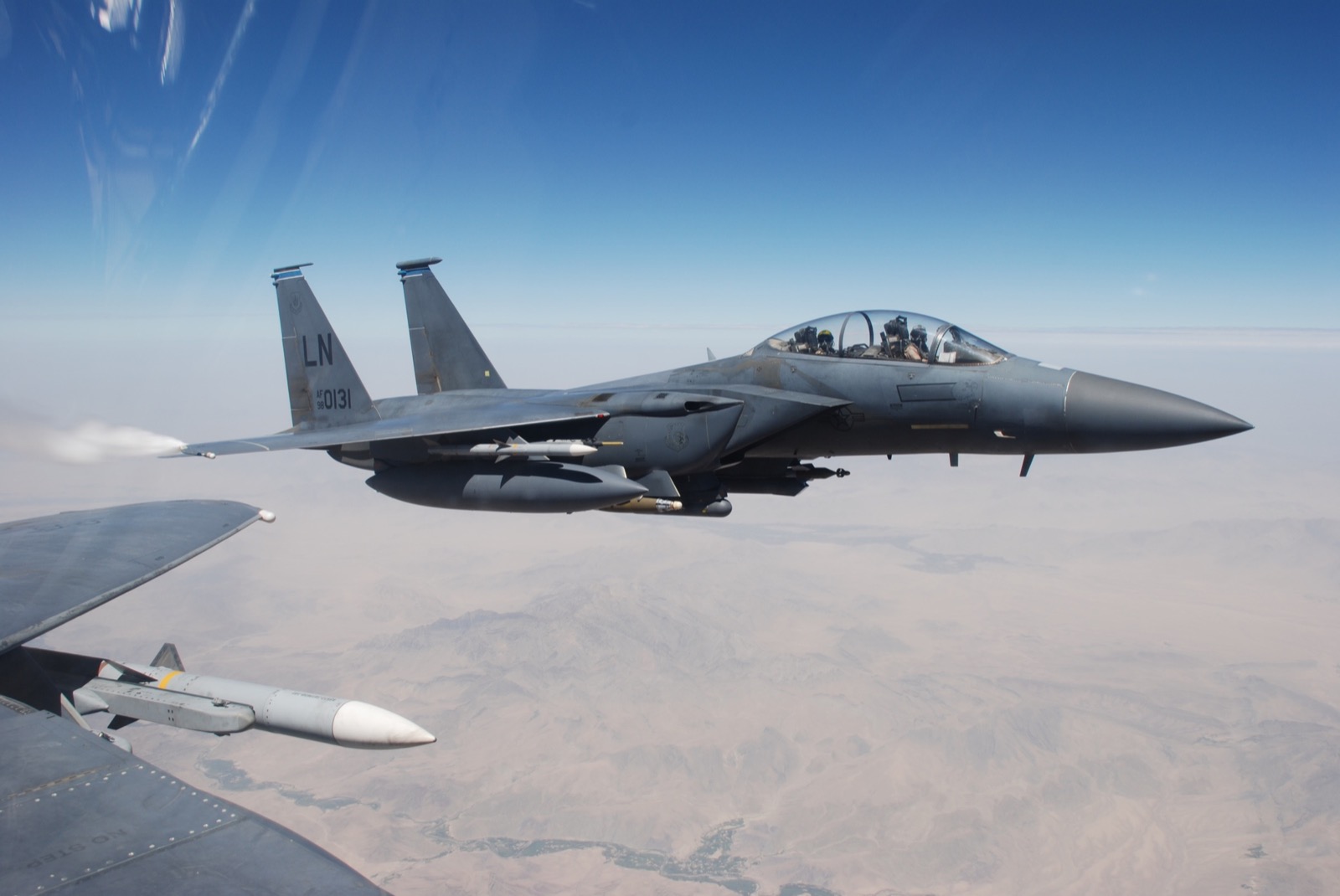
AGM-158A JASSM restored true deep-strike stand-off with a low-observable missile, a 1,000 lb penetrating warhead and about 200 nautical miles of reach; JASSM-ER pushed beyond 500 nautical miles. At the other end of the scale, GBU-53/B StormBreaker transformed the small bomb into a sensing system. Its millimetric-wave radar, imaging infrared and semi-active laser seeker could search, classify, reacquire and attack a moving target through poor weather.
That capability could not be bolted onto the old aircraft-weapon relationship. StormBreaker required Universal Armament Interface messages, ADCP II processing, PACS-45, higher-bandwidth stores buses and a datalink able to carry continuous target updates. The first live UAI-driven SDB II drop came from an F-15E in 2014; operational readiness followed in 2019–20. By then the crucial weapon was no longer only the object leaving the rail. It was the digital architecture that allowed the aircraft, crew, sensor and bomb to share one evolving picture of the target.
“We invented tactics because we had to.”— Mike “Pako” Benitez, on the Strike Eagle community’s dynamic-targeting evolution