1978–88 · The idea becomes an operational aircraft
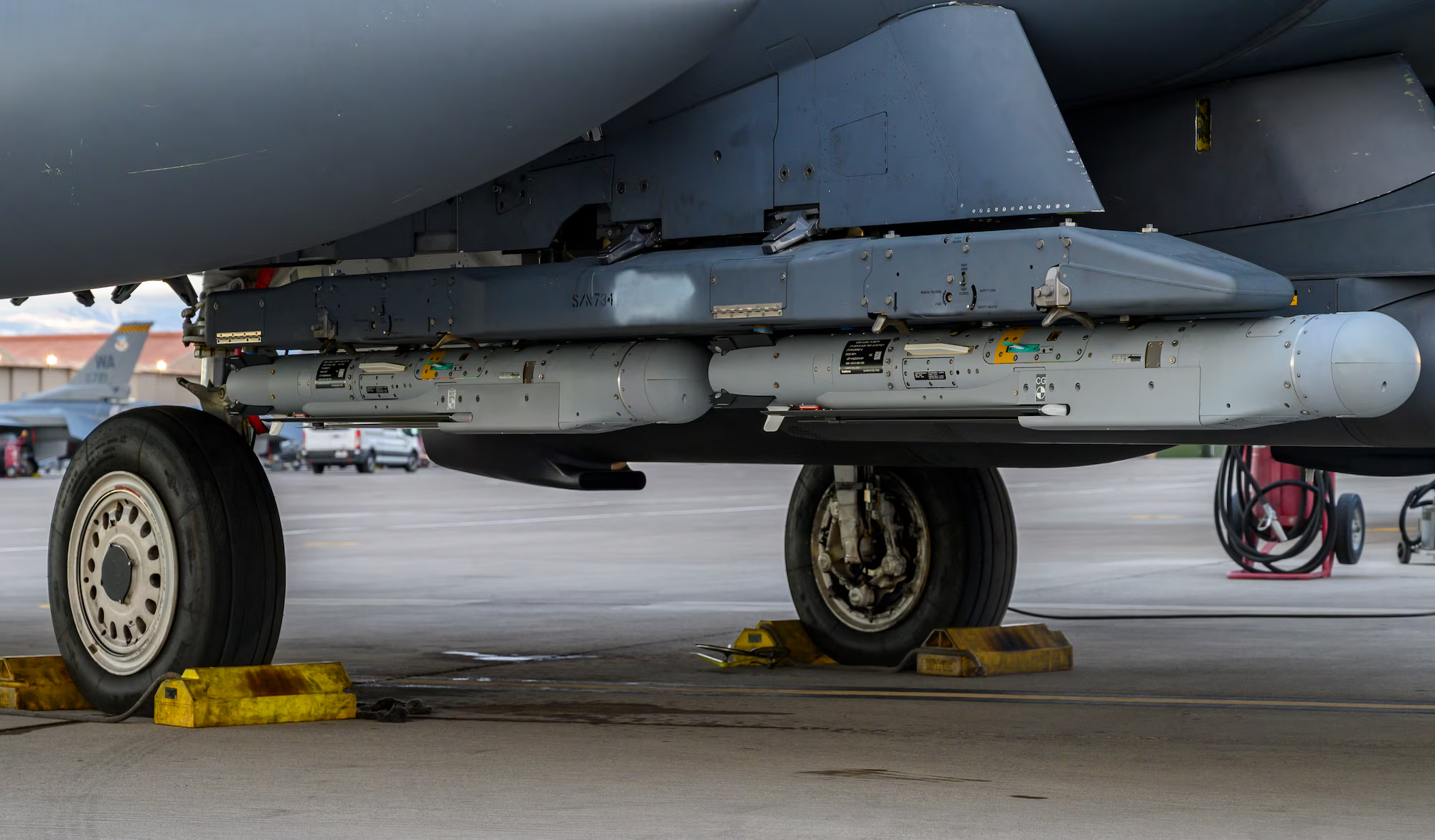
The Advanced Fighter Capability Demonstrator proved that an F-15 could carry a serious strike load, but the production F-15E required a new cockpit, conformal fuel tanks, APG-70 ground-mapping radar and the two-pod LANTIRN system to become an all-weather weapon rather than an air-show proposition. The first production aircraft flew in 1986; operational deliveries began in 1988. Be Afraid of the Dark follows the people who turned the proposition into a system.
1991–99 · Combat validates—and unsettles—the concept
The Gulf War arrived before the community had fully matured. Low-level night strike, Scud hunting and the loss of two aircraft revealed a machine of extraordinary potential whose doctrine was still being written. No-fly-zone operations over Iraq and the Balkans then created an experienced cadre, while GPS, improved radar modes and OFP Suites 2E–4E quietly prepared the aircraft for a different precision era.
2000–08 · The digital turn
GBU-31 JDAM stressed the legacy computer; Suite 4E+ introduced operational Link 16 and smarter weapon handoff; ADCP began fielding in 2004. Sniper, GBU-38 and SDB followed. Afghanistan and Iraq shifted the centre of gravity from pre-planned deep strike to dynamic targeting and CAS while the fleet was still being wired and upgraded aircraft by aircraft.
“The airplane had changed, but it had changed in ways I hadn’t expected.”— Randall “Hacker” Haskin, returning to the F-15E in 2006
2009–16 · The old brain meets the new radar
Suite 8 introduced UAI and expanded the digital map, but APG-82 testing showed ADCP had reached another ceiling. The AESA entered operational service in 2014–15 as JASSM restored deep stand-off and Libya demonstrated how quickly crews could rebuild a targeting system from mark points and whiteboards. ADCP II’s first flight in 2016 marked the start of the next internal rebuild.
2017–25 · Fusion, survivability and an uncertain horizon
MIDS-JTRS, ADCP II, StormBreaker and OFP 9.2E increased the volume and quality of information moving through the aircraft. Suite 9.3E brought EPAWSS compatibility and genuine fusion between radar, electronic warfare, datalink and weapons. Yet depot flow left mixed fleets, ageing parts grounded otherwise serviceable jets, and modernisation became as much about keeping the aircraft credible—and available—as giving it something new.
By 2025 the Strike Eagle aligns internally with much of the F-15EX architecture. The timeline therefore closes without a tidy ending: a 1970s airframe still being rewritten in software, still carrying new weapons, and still answering missions no one named when the first demonstrator flew.